
A Glimpse Into: The Batei Mahse Shelters of the 19th-Century Jewish Quarter
- Nir Topper

- 2 hours ago
- 3 min read
In the 19th century, life in the Jewish Quarter of Jerusalem's Old City was defined by extreme hardship, much like the rest of the city during that period. Under the waning Ottoman rule, residents faced abject poverty, severe overcrowding, and poor sanitation. Despite these challenges, the inhabitants remained within the city walls due to a deep religious affinity, security concerns regarding the open spaces outside, and a heavy economic dependence on the communal "Halukka" funds.
By 1880, the total population of Jerusalem—including the new neighborhoods beginning to emerge outside the walls—was estimated at 30,000 to 40,000 people. This included approximately 17,000 Jews, 8,000 Muslims, and 6,000 Christians and Armenians, with the majority of the Jewish population still residing within the Old City walls. For comparison, today the Old City is home to about 35,000 residents: roughly 27,000 Muslims, 5,000 Christians and Armenians, and 3,000 Jews.
Against this dense and complex backdrop, the "Batei Mahse" (Shelters of Refuge) complex stands out as one of the most impressive social and architectural undertakings of the era. The plan was conceived in 1857 by the "H.O.D. Kolel" (an acronym for Holland and Deutschland), with construction beginning in 1860 and spanning three decades. The initiative aimed to provide dignified housing for the city's poor and for Torah scholars who could not afford the soaring rents inside the walls.
Unlike the makeshift construction that characterized most of the Quarter’s alleys, Batei Mahse was a well-planned project. It featured relatively spacious family apartments consisting of two rooms and a private kitchen—a true luxury in an era when entire families were often crowded into a single room. Most apartments were provided free of charge to needy families and scholars for a fixed three-year term (following the custom of the time to pay rent three years in advance), while others were leased for a nominal fee. The apartments were allocated by lottery: one-third to members of the H.O.D. Kolel, one-third to the Hungarian community, and one-third to the poor of greater Israel. With proper ventilation and abundant natural light, the standard of living in the complex was considered exceptionally high for 19th-century Jerusalem, and those who won the right to live there were deemed truly fortunate.
One of the site’s most dramatic advantages is "Batei Mahse Square"—one of the largest open spaces in the Jewish Quarter. While other residents were squeezed into dark alleys and stifling courtyards, the inhabitants of Batei Mahse enjoyed an open public space that allowed them to literally breathe. In 1871, thanks to a generous donation from Baron Carl Wilhelm (Shimon) von Rothschild of Frankfurt, known as "The Pious Baron," the complex was expanded, and the impressive Rothschild House was built. This reflected the deep involvement of European Jewry in improving living conditions in Jerusalem. The Rothschild family crest, frequently seen on buildings and institutions they supported, is prominently displayed on the building's facade.
The complex also served as the final stronghold for the defenders of the Jewish Quarter during the 1948 War of Independence. On May 28, 1948, the surrender agreement with the Jordanian Arab Legion was signed, and the remaining residents and exhausted defenders gathered in Batei Mahse Square. Under the terms of surrender, women, children, and the wounded were evacuated to the New City by the Red Cross. All able-bodied men—including the few remaining combatants and over two hundred civilians—were taken into captivity in Jordan. These moments turned the square into a lasting symbol of the end of a historical chapter and of a steadfast stand until the very last moment.
--
---
----
Image 1 – The entrance gate to Batei Mahse Square. The inscription reads: "Batei Mahse for the poor on Mount Zion, May it be rebuilt and established speedily in our days, Amen"—a traditional blessing often added when mentioning Jerusalem or the other ancient holy cities of Israel: Hebron, Safed, and Tiberias.

Image 2 – Batei Mahse Square and the Rothschild House.

Image 3 – The Rothschild family crest on the facade of the Rothschild House at Batei Mahse (Courtesy of Yonatan Lukimson; Source: eyaldavidson.co.il). The crest depicts a hand grasping a bundle of five arrows, representing the five sons of Mayer Amschel Rothschild, who established the family’s banking branches in five different European cities. The hand holding the arrows symbolizes unity, cooperation, and collective strength ("Concordia"), reflecting their loyalty to one another and to family values.

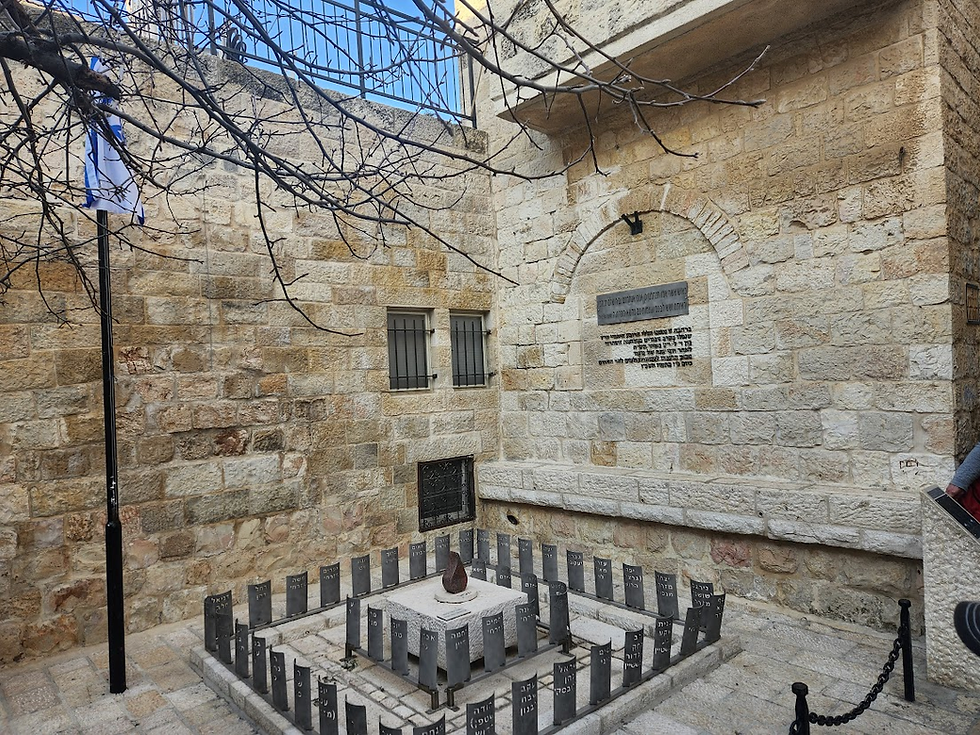
Image 4 – A memorial for the fallen defenders of the Jewish Quarter in 1948, located near Batei Mahse. Photo: Nir Topper.
👉Join one of my (quiet) Channels:
Telegram: nirtopper.com/telegram-channel
Whatsapp: nirtopper.com/whatsapp-channel
👉Rich content available for you on my Blog; Israel's History, Society & Culture:
--
---
----
#Jerusalem #JewishQuarter #OldCity #History #Architecture #Heritage #HolyLand #19thCentury #UrbanPlanning #Philanthropy #Demography #IsraelHistory #TravelIsrael #NirTopper #Tourism #Society #Culture #WarOfIndependence #1948 #IndependenceWar #nir_topper #tourguide #history #society #culture #israel #travel #tourism #archaeology #ניר_טופר #היסטוריה #חברה #תרבות #ישראל #טיולים #תיירות #ארכיאולוגיה


Comments