
The Self-Taught Architect Without a Degree Who Revealed and Shaped Jerusalem

Jerusalem in the mid-19th century underwent immense transformations. Amidst the city's rediscovery by European powers, one extraordinary man stood out: Conrad Schick. A missionary who arrived in 1846 as a young man of 24, he would eventually become the ultimate authority on the city’s history and structure. As a craftsman and a self-taught architect (possessing no formal certification), Schick lived and worked in the Holy Land for 55 years (1846–1901), documenting and designing the city he held sacred.
Upon his arrival, he found a severely neglected Ottoman Jerusalem with a population of only about 15,500—approximately 7,100 Jews (46%), 5,000 Muslims (32%), and 3,400 Christians (22%). They lived crowded within the Old City walls, lacking basic infrastructure for water, sewage, or medical care.
A Mission of "Living Witness"
Conrad Schick arrived in Jerusalem on behalf of Christian Friedrich Spittler’s "Brother’s House" (Brüderhaus). This missionary approach advocated for a "living witness" through labor and craft rather than direct proselytizing. His original goal was to assist the locals—Christians, Jews, and Muslims alike—by training them in productive trades. Throughout his years, he developed vital institutions for them, such as the Hansen Leper Hospital, vocational schools, and improved water infrastructure that significantly enhanced the city's quality of life. He left behind a living legacy that remains visible in Jerusalem's alleys today, both above and below ground.
An Architectural Fingerprint
Schick’s architectural signature is present in some of Jerusalem’s most iconic buildings outside the walls. He designed the Mea She'arim neighborhood in 1874 as a modern response to security and community needs, the Hansen Hospital, and the impressive Ethiopian Church. His personal masterpiece, "Tabor House" on Prophets Street (Hanevi'im), stands to this day as a testament to his attempt to integrate biblical and archaeological motifs into European construction in an eclectic style—some might even say too eclectic, bordering on the tasteless.
Explorer of the Underground
Beyond the visible structures, Schick was a pioneer in exploring Jerusalem’s hidden, subterranean world. In 1880, he was the first to scientifically document and publish the "Siloam Inscription" found in Hezekiah’s Tunnel. This was a defining moment in biblical archaeology, confirming the accounts in 2 Kings and 2 Chronicles regarding Hezekiah’s waterworks. Simultaneously, he managed an unprecedented survey of nearly 50 cisterns and underground chambers on the Temple Mount—data that, in some cases, remains the sole source for researching this sensitive site. His scientific integrity was particularly evident when he investigated the "Garden Tomb" and concluded, contrary to the expectations of his Protestant community, that it was not the authentic tomb of Yeshua.
Master of Models
Schick’s unique talents were also brilliantly expressed in the art of model building. He created incredibly detailed three-dimensional wooden models that were far more than mere art pieces. His model of the Temple Mount revealed the site's complex historical layers, and his model of the Church of the Holy Sepulchre served as a crucial arbitration tool in resolving long-standing disputes between various Christian denominations regarding the division of space within the structure. Today, most of his original models can be viewed at the Conrad Schick Heritage Center at Christ Church and the "Paulus Haus" complex in Jerusalem. A visit to these sites offers a fascinating window into Jerusalem's topography as documented by Schick’s skilled hands.
A Vision Beyond the Walls
Schick’s vision did not stop at the city walls; it extended into infrastructure and transportation. As early as 1867—decades before it became a reality—he proposed a detailed engineering plan for a railway connecting Jaffa to Jerusalem. Although the route eventually paved by the Ottomans was further south, the geological surveys and conceptual framework he laid served as the modern foundation for connecting the city to the world. His professional reputation allowed him to act as a rare inter-religious bridge, earning the trust of the Ottoman government, European powers, and local communities alike.
👉Join one of my (quiet) Channels - Society, Culture & History:
Telegram: https://t.me/nirtopper
The legacy of Conrad Schick is a story of endless curiosity and the fascinating power of the autodidact. Without formal education in architecture or archaeology, he became the most influential figure in our understanding of late 19th-century Jerusalem. He preserved the memory of the Old City while physically building the New. Today, as we stroll down Prophets Street or through the alleys of Mea She'arim, we encounter the vision of a man who believed that Jerusalem's future was inextricably linked to a deep understanding of its past.
Image 1: My recommendation: Schick's Jerusalem by Shirley Graetz—a fascinating and educational book.
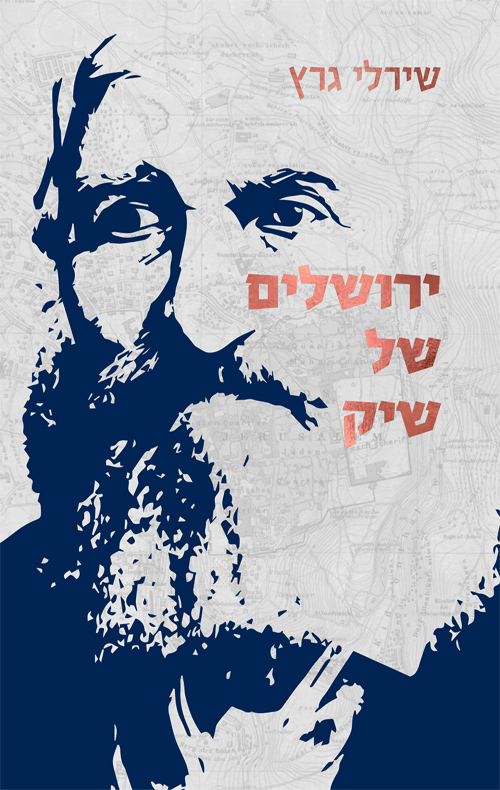
Image 2: Conrad Schick. Source: Ulf Petersson, Public domain, via Wikimedia Commons.

Image 3: Sketch and documentation by Conrad Schick—the breach in the Jerusalem wall at Jaffa Gate, made in 1898 for the visit of Kaiser Wilhelm II. Schick’s documentation highlights the changes made to the city walls during the Ottoman period. Source: Conrad Schick, Public domain, via Wikimedia Commons.

Image 4: Tabor House on Prophets Street—Conrad Schick’s home, which he designed and built himself. Source: magister, Attribution, via Wikimedia Commons.

Image 5: Model of the Temple Mount in 691 AD, created by Conrad Schick. Source: American Colony Photo Department or Matson Photo Service, Public domain, via Wikimedia Commons.

Image 6: The grave of Conrad Schick, Mount Zion. Source: Ulf Heinsohn, CC BY-SA 4.0, via Wikimedia Commons.

👉Join one of my (quiet) Channels - Society, Culture & History:
Telegram: https://t.me/nirtopper
--
---
----
#nir_topper #tour_guide #archaeology #history #society #israel #travel #culture #ניר_טופר #מורה_דרך #ארכיאולוגיה #היסטוריה #ישראל #טיולים #תרבות #חברה #קונרד_שיק #ירושלים #חקר_ירושלים #תולדות_ירושלים #רחוב_הנביאים #מאה_שערים #ConradSchick #JerusalemHistory #OldCityJerusalem #ArchitectureIsrael #BiblicalArchaeology #HolyLand #19thCentury #UrbanPlanning