
The Dissonance of the City That Touched the Sky: Can the Survivor of Quakes and Wars Reclaim Its Glory?
- Nir Topper

- Mar 15
- 5 min read
Perched at an elevation of 845 meters above sea level, Safed (Tzfat) is far more than just another city on the ridges of the Upper Galilee. Its historical significance is derived, in part, from its commanding strategic location overlooking the central crossroads between Acre and Damascus, and between Lebanon and the northern valleys. This status transformed it into an extraordinary cultural and administrative hub for various rulers and empires throughout history.
Ancient Roots and Early Records
The earliest signs of settlement in Safed are burial caves dating back to the 2nd millennium BCE, indicating an active Canaanite presence. Interestingly, "Safed" is not mentioned in the Bible as a Galilean city; the name appears only once in the Book of Judges (1:17), describing the conquest of a Canaanite city named Zephath in the Negev by the tribes of Judah and Simeon—a city later renamed "Hormah."
The first explicit documentation of the Galilean city appears in the 1st century CE in the writings of Josephus Flavius. In his work The Jewish War (2.573), he mentions "Sepph" as one of the sites he fortified as part of the Galilean defense line during the Great Revolt against the Romans. During the revolt, Safed served as a strategic lookout and refuge. However, as Roman legions under Vespasian advanced in 67 CE and key strongholds like Yodfat fell, control of Safed passed to the Romans, likely without a battle.
The Citadel of Empires
In the Middle Ages, Safed became one of the most vital strategic points in the Land of Israel. During the Crusader period, particularly after 1240, the Crusaders returned to Safed and rebuilt the citadel—initiated by Bishop Benoit d'Alignan—turning it into one of the largest fortresses in the Middle East. Managed by the Knights Templar, the fortress dominated the entire Galilee. It was considered an engineering masterpiece with double fortification systems and a deep moat, granting it control over the main mountain passes and the arteries connecting the Hula Valley to the Sea of Galilee region.
The turning point came in 1266 when the Mamluk Sultan Baybars captured the city after a prolonged siege. Baybars turned Safed into the capital of the "Kingdom of Safed" (Mamlakat Safad), an administrative province ruling over the Galilee and southern Lebanon, stretching from the Litani River in the north to Jenin in the south. To demonstrate his power, he built the "Victory Tower" atop the citadel—a massive, snail-shaped circular structure approximately 35 meters in diameter and reaching a height of 60 meters. Baybars also established mosques, khans, and a rapid postal network connecting Cairo and Damascus, making Safed one of the most important cities in the Middle East at the time.
Today, visitors to the Citadel Park (Gan HaMetzuda) can see the remnants of Mamluk and Crusader splendor: the massive foundations of Baybars’ round tower, vaulted underground halls, and impressive water cisterns. The remains of the moat and the massive walls still bear witness to the city’s past might.
The Golden Age of Spirit and Industry
In the 16th century, Safed experienced an unprecedented spiritual and economic "Golden Age." This era was born from a unique fusion of textile technology brought by Jewish exiles from Spain and a deep religious longing. Economic prosperity allowed scholars to dedicate themselves to study, and Safed became the halakhic and Kabbalistic center of the Jewish world. This was the era of Rabbi Joseph Karo, author of the Shulchan Aruch, and the Holy Ari (Rabbi Isaac Luria), who developed Lurianic Kabbalah, which profoundly influenced Jewish mysticism.
Survival and Sovereignty
Throughout the generations, the city endured severe tests of survival, from the catastrophic earthquake of 1837—which destroyed the terraced houses and claimed the lives of about 2,000 residents—to the fateful battles of the War of Independence. With the British departure in April 1948, strategic high points remained in the hands of Arab forces, leaving the Jewish Quarter besieged and isolated. The battle for the city was decided in May 1948 by the forces of Operation Yiftach under the command of Yigal Allon, led by the Palmach's 3rd Battalion, which completed the liberation of the city on May 11th.
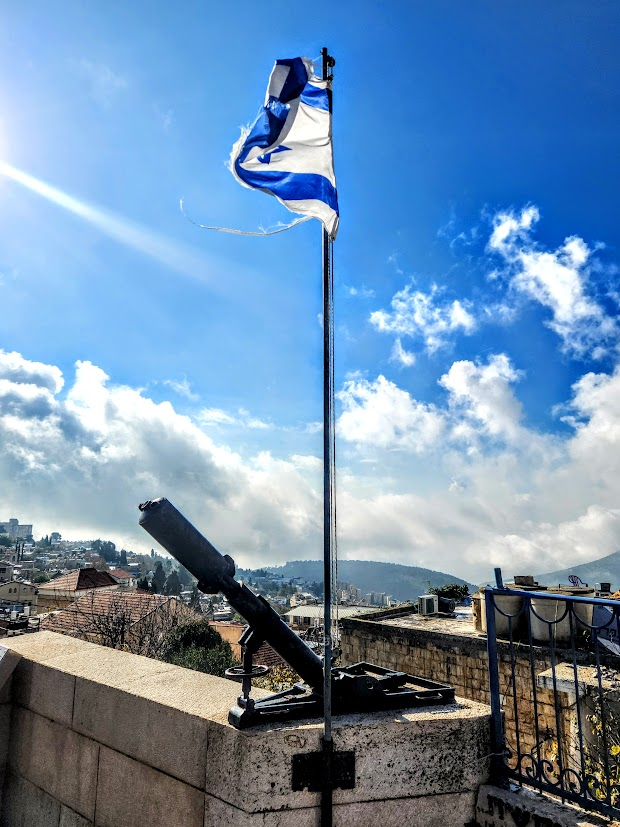
A notable tool used during the battles was the "Davidka"—a mortar whose primary impact was the deafening roar of its explosion and the echoes bouncing off the mountains. This created a significant psychological effect, contributing to the panic among Arab forces. Following intense urban combat, the Citadel, the municipal hospital, and the police building ("The Saraya") were captured. With the fall of these key points, most of the city's Arab residents fled, and Safed came under full Jewish control.
Demographics and Socio-Economic Challenges
Today, Safed has a population of approximately 39,000, but this number hides a dramatic demographic shift. The city is undergoing a rapid process of "Haredization." Currently, the Ultra-Orthodox (Haredi) sector—including Litvaks, Hasidim, Sephardic communities, and Baalei Teshuva—makes up over 50% of its residents. Alongside them is a significant Religious-Zionist community and a dwindling secular minority. This social fabric creates complex challenges in city management and resource allocation, as the needs of the various communities often clash.
Economically, Safed is in a particularly challenging position. The city is ranked in Socio-Economic Cluster 2 (out of 10), placing it among the poorest cities in Israel. Unemployment rates are high, and average wages are significantly lower than the national average. Despite potential growth engines like the Ziv Medical Center and the Bar-Ilan Faculty of Medicine, the city suffers from a "brain drain" of educated youth and a lack of modern employment infrastructure.
👉Join one of my (quiet) Channels - Israel's History, Society & Culture:
Telegram: nirtopper.com/telegram-channel
Whatsapp: nirtopper.com/whatsapp-channel
The Gap Between Potential and Reality
The most painful aspect of Safed today is the dissonance between its immense historical, heritage, and tourism potential and its somber physical and economic state. Safed, which could have been the "Florence of the Galilee" or a global pilgrimage site for seekers of spirituality and Kabbalah, suffers from glaring infrastructural neglect. The Old City, with its enchanting alleyways, struggles with maintenance issues and a lack of holistic tourism planning.
The famous Artists' Quarter, once the beating heart of Israeli creativity, has lost its luster; many galleries have closed or been replaced by other institutions. Safed's potential as the "Capital of the Galilee"—combining crisp mountain air, thousands of years of history, and an international spiritual center—remains largely unfulfilled due to budgetary constraints, complex political management, and priorities that have yet to bridge the gap between preserving the past and developing the future.
Yet, Safed remains a city of continuity and renewal. It has surprised the world before, and one can only hope that, through the unique blend of faith and mysticism that defines it, the city will find its way back to its days of glory.
Image 1 – The Meron Range, with its two famous peaks, as seen from Safed. Photo: Nir Topper.

Image 2 – Remains of the Crusader Citadel. Source: Wikipedia, Safed. Almog, Public domain, via Wikimedia Commons.

Image 3 – The Memorial to the Fallen of the War of Independence, at the summit of Citadel Park. Source: Wikipedia, Safed. Gellerj, CC BY-SA 3.0.

Image 4 – The "Davidka" mortar. Photo: Nir Topper.
👉Join one of my (quiet) Channels - Israel's History, Society & Culture:
Telegram: nirtopper.com/telegram-channel
Whatsapp: nirtopper.com/whatsapp-channel
--
---
----


Comments