
Among Giants: The Queen Who Navigated Judea Through the Ancient World’s "Cold War"

Between 76 and 67 BCE, a woman ruled the Kingdom of Judea as a full sovereign—Queen Salome Alexandra (Shlomtzion). She reigned not as a king's consort or a queen regent, but as an independent monarch, the sole source of authority for her rule. Sages of the Talmud remembered her era with profound positivity, describing it as a time of abundance and peace, while modern historiography often refers to it as the "Golden Age" of the Hasmonean dynasty. The historian Flavius Josephus described her as a formidable ruler who maintained the nation in tranquility, successfully managing a stable kingdom amidst a constant geopolitical storm.
The Rise of a Pragmatic Sovereign
Salome Alexandra ascended the throne in 76 BCE following the death of her husband, Alexander Jannaeus. Jannaeus had been a ruthless persecutor of the Pharisees, famously crucifying 800 of them and slaughtering their families before their eyes. He died of malaria during the siege of the fortress of Ragaba in Transjordan. On his deathbed, he instructed her to keep his death a secret until the fortress was captured. His final advice was for her to grant power to the Pharisees—a pragmatic recognition that only she, having opposed his brutal methods, could heal the kingdom's deep internal rifts.
A Genius Internal Maneuver
Salome acted with wisdom: she buried Jannaeus with honor, appointed her eldest son, Hyrcanus II, as High Priest, and approached the Pharisees—the religious movement representing the masses—with a clear proposition: religious freedom and political influence in exchange for supporting the stability of the throne.
Her internal strategy was brilliant. She restored the Pharisees' control over the Sanhedrin, the courts, and the Temple ritual, and officially recognized the authority of the Oral Law. This move transformed them from enemies of the state into its central pillars. Simultaneously, to avoid a revolt from the displaced Sadducees (the aristocratic and priestly elite), she allowed them to reside in desert fortresses away from Jerusalem—a strategic distancing that pacified the domestic front without relinquishing control.
Geopolitics in a Bipolar World
Geopolitically, Salome Alexandra managed a kingdom at the heart of an ancient "Cold War" between the era's superpowers. To the east, the Kingdom of Armenia under Tigranes the Great reached the height of its power, conquering Syria and Phoenicia and reaching the gates of Acre—a direct existential threat to Judea. To the west, the Roman Republic was in the midst of aggressive eastward expansion; the general Lucullus was leading the war against Mithridates of Pontus and his Armenian allies.
Salome skillfully navigated between these giants. She employed "soft diplomacy," sending delegations with lavish gifts to Tigranes to prevent an invasion. At the same time, she benefited from the fact that Roman military pressure eventually forced the Armenians to withdraw from the region. Relations with Rome were maintained based on the traditional Hasmonean treaty (Amici et Socii Populi Romani), yet she remained strictly neutral, avoiding being dragged into their wars. Her central challenge was maintaining sovereignty against the Nabataeans to the south and regional border instability left by the Seleucid vacuum. Her solution was an unprecedented military buildup: she doubled the size of the army and recruited a foreign mercenary force, turning Judea into a deterrent power that few dared to confront.
The Legend of Abundance
Talmudic and Midrashic memory preserves picturesque descriptions of extraordinary prosperity during her reign. It is told that rains fell only on Wednesday and Friday nights so as not to disrupt the work of laborers. Harvests reached legendary proportions: grains of wheat grew as large as kidneys, barley as large as olive pits, and lentils like golden Dinars. The sages of that generation even preserved samples of these crops to show future generations the blessing that resides in the world when the government and the Torah walk hand in hand.
These descriptions reflect the deep gratitude of the Pharisees for that era. They complement historical facts regarding social reforms led by Simeon ben Shetach under her patronage and full cooperation, including the establishment of a public education system for children and the Ketubah (marriage contract) regulation, designed to protect women from hasty divorces.
Architectural Legacy: The Dual Palaces
The most fascinating archaeological find from her period is the Hasmonean Winter Palaces in Jericho. Archaeologist Ehud Netzer uncovered two surprisingly similar palaces built side-by-side. The leading hypothesis is that Salome Alexandra built them for her two rival sons—Hyrcanus and Aristobulus—in an attempt to maintain equality between them and prevent a civil war. This is a unique case in the ancient world of royal "duplex" architecture—the oldest semi-detached building in the world by archaeological definition—and it speaks to the internal pressure the Queen faced until her final days.
The End of an Era
Salome Alexandra passed away in 67 BCE, and the civil war she so feared broke out almost immediately. Aristobulus II seized power, Hyrcanus was pushed aside, and within a few years, the Roman general Pompey arrived in Jerusalem. He settled the dispute between the brothers by ending Jewish independence altogether, marking the beginning of the Roman period in the Land of Israel (63 BCE).
Shlomtzion HaMalka Street in Jerusalem, named in 1948, serves as a tangible reminder: one decade of her rule managed to hold an entire kingdom together. What followed her tore it apart.
Pompey's conquest in 63 BCE, which brought an end to the succession struggle between the sons of Queen Salome Alexandra, effectively marked the end of independent Jewish sovereignty over the Land of Israel.
👉Join one of my (quiet) Channels - Society, Culture & History:
Telegram: https://t.me/nirtopper
Aside from three brief, fleeting episodes—Mattathias Antigonus (40–37 BCE), the provisional government established during the Great Revolt (66–70 CE), and the Bar Kokhba state (132–135 CE)—there were no further successful attempts at self-rule. Following the suppression of the Bar Kokhba Revolt in 135 CE, independent Jewish sovereignty over the land did not exist again until the Declaration of Independence in 1948.
Consequently, Queen Salome Alexandra was essentially the last independent Jewish sovereign to rule the Land of Israel until the establishment of the State of Israel.
Image 1: The Kingdom of Judea during the reign of Salome Alexandra. Source: derivative work: הגמל התימני (talk)Hasmoneese_rijk.PNG:Machaerus at nl.wikipedia(Original text : nl:Gebruiker:Machaerus), CC BY-SA 3.0 <http://creativecommons.org/licenses/by-sa/3.0/>, via Wikimedia Commons
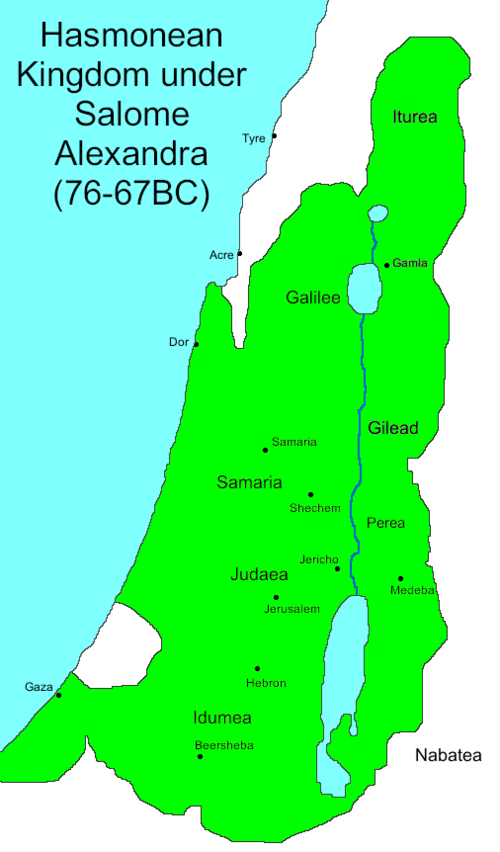
Image 2: The Independent Kingdom of Armenia at its peak in 66 BCE, bordering Judean territories after King Tigranes II conquered the Seleucid Empire. Source: Geagea, CC BY 4.0 <https://creativecommons.org/licenses/by/4.0>, via Wikimedia Commons

Image 3: An imaginary illustration of Queen Salome Alexandra by a 16th-century European artist. Source: Published by Guillaume Rouille(1518?-1589), Public domain, via Wikimedia Commons

👉Join one of my (quiet) Channels - Society, Culture & History:
Telegram: https://t.me/nirtopper
--
---
----