
When Geology Meets Ancient Engineering
- Nir Topper

- Feb 8
- 5 min read
Sataf – a place of springs, dark tunnels, terraces, and agriculture. But the truth is, what you see before your eyes isn't just "nature." Sataf is one of the most spectacular examples of a "Cultural Landscape."
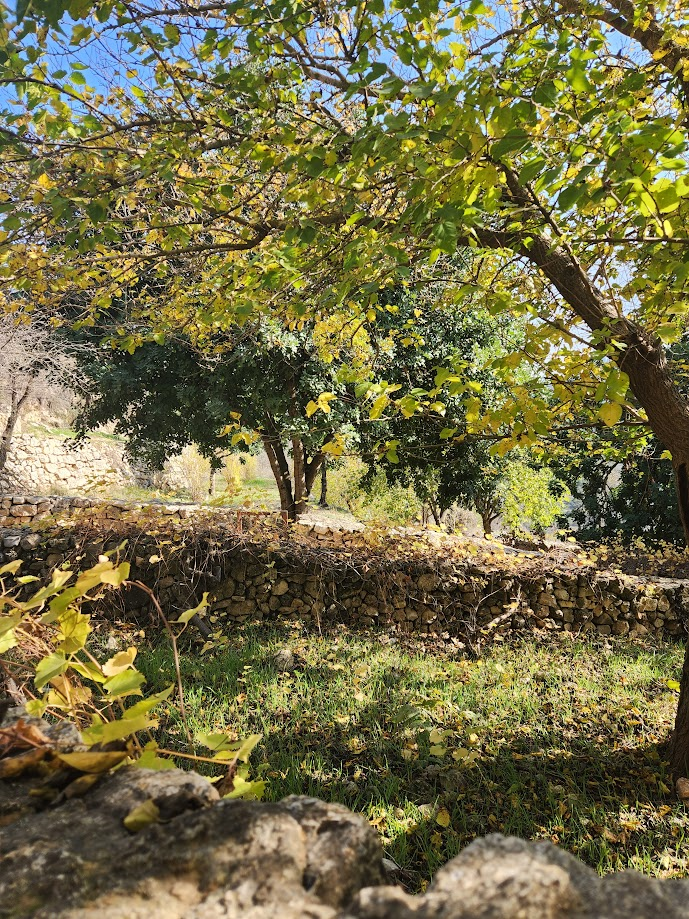
Here, geology dictated reality: rainwater seeps into the cracked limestone (the aquifer) until it hits a layer of rock impermeable to water (the aquiclude). Unable to continue downward, the water flows sideways and bursts out onto the mountainside as a perched spring. However, it was humans who sculpted the mountain. Without these terraces, the fertile soil would have been washed away into the Sorek Stream within a few short winters. Every stone in these steps is a testament to a struggle for survival spanning thousands of years.
How old are the terraces? When were they first built at Sataf?
Dramatic excavations conducted at Sataf by Prof. Shimon Gibson shattered the myth that the terraces date back to the Iron Age (roughly the period of the Israelite settlement of Canaan) and revealed an "archaeological earthquake": the terraces at Sataf were built as early as the Early Bronze Age, and perhaps even earlier, in the 4th millennium BCE. Ancient farmers were already moving rocks and shaping the landscape here back then. We are essentially walking through a living museum of ancient human technology.
How does it work? The Anatomy of a Terrace – OR – How to rebuild a mountain?
This technology, which appears simple, is actually sophisticated civil engineering. The goal: to transform a steep slope into a system of level surfaces ("treads") held up by retaining walls ("risers").
The Construction: It begins with digging foundations into the bedrock. On these foundations, the wall ("riser") is built from local fieldstones using dry stone construction (without mortar), incorporating small stones ("gravel") for drainage. This is critical – water must seep through the wall; otherwise, hydrostatic pressure will cause it to collapse.
The Fill: The gap created between the wall and the slope is filled with soil, usually fertile Terra Rossa brought from the surrounding area or washed down naturally.
The Advantages: The terrace is a "runoff and silt trap." It brakes the water rushing down the slope, forcing it to seep into the ground to water the trees, and prevents the precious soil from washing into the valleys. Without terraces, the Jerusalem hills would be completely bare and rocky.
Maintenance: There is no "set it and forget it" here. A terrace requires a loving yet firm hand. Every winter requires inspection: Has a "belly" (bulge) formed in the wall? Have stones fallen? Immediate repair is mandatory. Furthermore, deep plowing is essential not just for crops, but to prevent cracks in the soil through which water could burst through and destroy the wall from below.
And what about the name?
If you look for "Sataf" in the Bible, you won't find it. Some believe the Arabic name "Sataf" preserves a Mishnaic agricultural term – "Situf" – the act of scarring a fig fruit to hasten its ripening. However, this is merely a hypothesis, stemming from the appearance of the ancient orchards covering the slope. A good friend suggested there might be a connection to the Arabic word Stipa, expressing a pile or stacking things atop one another to create a sort of step (similar to the Hebrew slang derived from Arabic: a stiffa of cash). This place is a mosaic of names and memories, from the Bronze Age to the Arab village conquered in Operation Danny in 1948.
The Genius of Water
The true genius of Sataf lies in the water. There is a clear division here between two worldviews: Rain-fed agriculture (Baal farming) and Irrigated agriculture (Shelahin farming). In the orchards above, the trees "wait for the Baal" (the rain god, or the heavens). But below, near the springs (Ein Sataf and Ein Bikura), humans take command. This is irrigated agriculture – water is sent through channels via gravity. At Sataf, they developed this method into an art form, with collection pools that are blocked and opened according to need and the farmers' desire to control the water flow intensity.
The Modern History
The modern history of the site is no less fascinating. After the War of Independence, an immigrant Moshav named "Bikura" was established on the ruins of the abandoned village. It survived only a short time before disbanding. Stepping into the vacuum were the fighters of the legendary Unit 101 and the Paratroopers, who turned the terraces and abandoned houses into a training ground for urban warfare. Part of the destruction we see today is not the ravages of time, but the result of those intense training exercises in the 1950s.
👉Join my (quiet) WhatsApp channel - Society, Culture & History:
So, what do we see today?
In the 1980s, the KKL-JNF (Jewish National Fund) realized that the only way to preserve the terraces was to cultivate them (a terrace without a farmer collapses). Thus, the "Bustanof" project was born—a social-agricultural experiment allowing city residents to lease a small plot and become farmers for a moment, thereby preserving this immense heritage. The project is considered a huge success and a global model for community forestry. The idea that city dwellers (mostly from Jerusalem and the surrounding area) "adopt" a terrace and cultivate it created a deep connection between the community and the forest. Demand for plots far exceeds supply, and there are long waiting lists. This is one of the few places in Israel where traditional agriculture is preserved thanks to the general public rather than institutional bodies alone. Maintenance is combined: KKL-JNF is responsible for public areas, trails, large retaining walls, and the central water system. The lessees ("urban farmers") are responsible for the daily cultivation of their plots (pruning, weeding, planting). This combination is the secret to the magic (and the challenge) of the place.
When you arrive at Sataf...
When you see the flowing spring, the agriculture, and the terraces, remember: you are not just seeing water, stones, and trees. You are looking at technology that is 6,000 years old (at least), the remnants of people who knew nature and knew how to work with it to extract the best from the land.
Want to see it for yourself? The Traveler's Guide to Sataf
📍 How to get there? Enter "Sataf Upper Parking" into Waze. Parking is free.
🥾 Recommended Route (Circular): From the upper parking lot, descend the marked trail (blue) through the orchards to the springs. The descent is comfortable and reveals the impressive terrace system. Down below, two springs await you: Ein Sataf and Ein Bikura. The
Main Attraction: Entering the water tunnels hewn into the rock (bring flashlights and water shoes!). Returning to the upper parking lot involves an ascent (these are the Jerusalem hills, after all), so take your time. Trail Length: Approx. 3 km | Time: 1.5–2 hours. There is also an option for a non-circular route, but it requires a second vehicle to pick you up at the bottom.
👉Join my (quiet) WhatsApp channel - Society, Culture & History:
⚠️ Important:
The Fruit: Despite the temptation, picking fruit is forbidden. The trees belong to private individuals who lease the plots and invest their money and time in them. Please respect their labor.
The Water: Entering the tunnels and small wading pools is permitted, but swimming in the large, deep collection pools is forbidden and dangerous.
Gear: Comfortable walking shoes, water, and a flashlight for the tunnels.


👉Join my (quiet) WhatsApp channel - Society, Culture & History:


Comments