
Short – One Concept a Day: The Greek Strawberry Tree (Arbutus)
- Nir Topper

- May 9
- 2 min read
The Greek Strawberry Tree (Arbutus andrachne) is one of the most striking and unique trees in the Mediterranean woodland. In Israel, it can be found in the mountainous regions of the Galilee, the Golan Heights, Mount Carmel, the Samarian Hills, and the Judean Mountains, as well as the Shephelah (Judean Foothills), with its southernmost distribution boundary in the Adullam Grove Nature Reserve.
The tree is renowned for its smooth, reddish-brown trunk. Every year in early summer, the outer bark peels and sheds, revealing a fresh green layer underneath that gradually turns red again. The Arbutus is a hardy tree that grows primarily on marl and chalky soils; its presence often indicates the existence of nearby contact springs (aquifers). Its round red fruits, which ripen in late autumn and early winter (November–January), are edible and form an integral part of the local ecosystem. Unlike most wild fruits in Israel that ripen in the summer, the Arbutus fruits "close" the wild fruit season. Much of the tree's fame stems from the vivid contrast between the deep reddish-brown of its trunk and the lush green of its foliage.
The Legend of "Katal-Ab"
The Hebrew name "Katalab," which sounds like "Katal-Ab" (meaning "Father-Slayer"), combined with the "exposed" appearance of the trunk during the peeling season, has earned the tree a special place in local culture and on hiking trails throughout the Israeli highlands.
The most popular folk legend tells of a shepherd who quarreled with his father. During the struggle, he raised his staff against his father and killed him. The staff became stained with blood and grew into a tree with a smooth, red trunk—hence the name "Katal-Ab" (Father-Slayer).
Other legends exist as well: one links the tree to the site where Absalom died after rebelling against his father, King David. Another tells of a tree that fell in love with a wounded bird and turned red from the sheer effort of trying to follow her when she flew away.
The Hebrew name Katalab originates from Arabic (Qatil Abihi), which also carries the same meaning of "Father-Slayer"; a similar name, Qatal Abuhy, appears in Syriac. An alternative botanical explanation attributes the name to a specific trait of the tree—Katal be-ibo (withering in its prime)—referring to its tendency to shed branches that do not receive enough light, essentially "killing" them before they reach maturity.
In any case, the legend of the "Father-Slayer" remains a staple of the Israeli landscape, shared by guides in the valleys of the north and wherever the impressive red trunk of the Arbutus is found.
--
---
----
👉Join one of my (quiet) Channels:
Telegram: nirtopper.com/telegram-channel
Whatsapp: nirtopper.com/whatsapp-channel
👉Rich content available for you on my Blog; Israel's History, Society & Culture:
Image 1: A peeling Arbutus tree in the Lower Galilee. Photo: Nir Topper.
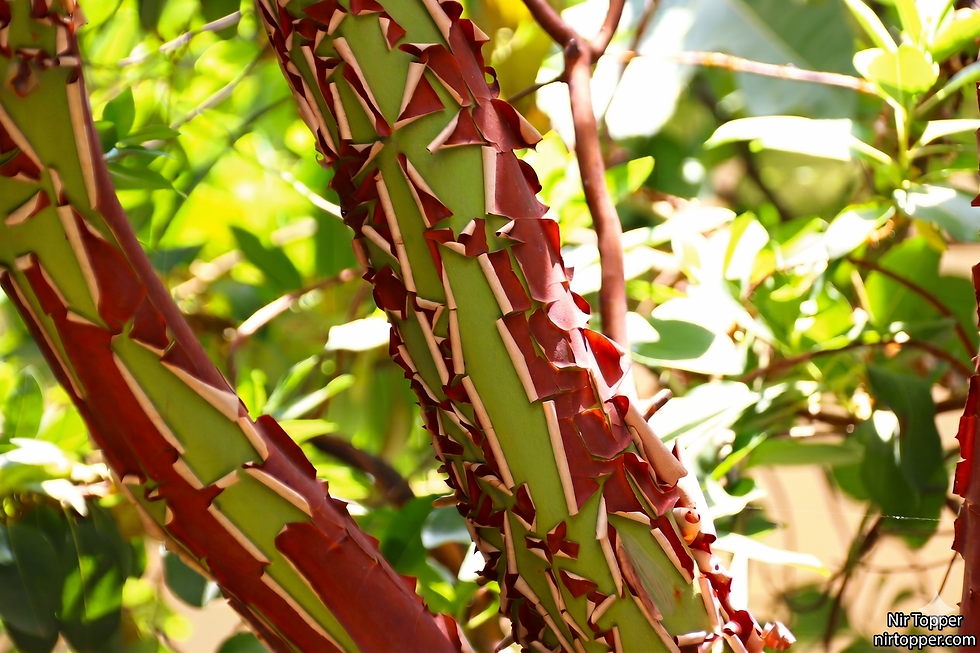
Image 2: A Greek Strawberry Tree (Arbutus andrachne) in the Jerusalem Mountains. Source: Y.S. via Hebrew Wikipedia, CC BY-SA 3.0.


Comments