
A Breach in the Wall, Bells in the Sky, and 2,000-Year-Old Clues: The Wondrous Story of the Church of the Redeemer
- Nir Topper

- May 8
- 4 min read
One of the most prominent landmarks rising above the skyline of Jerusalem’s Old City is the bell tower of the Lutheran Church of the Redeemer, standing 40 meters tall and towering over the surrounding structures. Located in the Muristan complex adjacent to the Church of the Holy Sepulchre, this impressive building is more than just a place of worship; it is a living testament to the imperial power struggles of the 19th century. (To avoid confusion, it is important to note that there is also a Catholic Church of the Savior—San Salvatore—located elsewhere in the Old City).
The history of the Church of the Redeemer is deeply intertwined with the processes that shaped the Land of Israel during the late Ottoman period. A defining moment occurred in 1898 when German Emperor Wilhelm II arrived in Jerusalem to inaugurate the church in a grand ceremony. In preparation for his arrival, the Ottomans breached the section of the wall between Jaffa Gate and the Citadel (Tower of David), filled the moat with sand, and created a wide passage—a breach that still serves as the vehicle entrance adjacent to Jaffa Gate today.
Various legends have been woven around the reason for this breach. Some attributed it to the Empress’s carriage, which could not navigate the narrow, 90-degree turn of the Jaffa Gate (designed as a defensive measure against attackers). Others saw it as an Ottoman gesture of honor—a grand and visible entrance befitting the status of the Emperor and his wife. However, German sources suggest that the initiative was entirely Ottoman and that the Kaiser himself actually opposed the breaching of the historic wall. Regardless, the Ottoman authorities made extensive efforts—cleaning, street renovations, installing lamps, and preparing roads both within Jerusalem and along the route leading to it—to bestow honor upon the Emperor and emphasize the importance of the alliance with Germany.
The construction of the church symbolized Germany’s ambition to demonstrate presence, power, and religious-political influence in the heart of Jerusalem. By doing so, it established a central Protestant-Lutheran stake in the Old City, which until then had been identified almost exclusively with the traditional Orthodox and Catholic churches. For Germany, this was not merely a religious act but a declaration of cultural sovereignty amidst other European powers active in the city at the time, such as Russia, France, Italy, Britain, and Austria.
Architecturally, the church was built in the Neo-Romanesque style, seeking to revive the grandeur of the Middle Ages. Architect Friedrich Adler designed it upon the ruins of an 11th-century Crusader church (Santa Maria Latina), thereby creating a historical continuity between ancient European-Christian presence and modern times. Inside the church, one can appreciate a sense of Protestant restraint, contrasting with the visual opulence of the nearby Church of the Holy Sepulchre. However, the true depth lies both beneath and above the surface.
In the archaeological section beneath the church, visitors can explore the layers of Jerusalem’s history. Excavations revealed a quarry from the Second Temple period, evidence of gardens from that same era attributed to the time of Jesus Christ, remains of Roman structures from the period of Emperor Hadrian, and a mosaic floor from the Crusader church. A wall uncovered at the site in 1893 sparked great excitement when it was identified as Jerusalem’s "Second Wall" from the Second Temple period—a wall described briefly by Flavius Josephus in The Jewish War, but whose remains had yet to be definitively found.
Excavations conducted in the 1970s eventually proved that the wall found beneath the church actually belongs to a later Roman period. The exact path of the "Second Wall" remains an open question to this day—one with far-reaching implications. The topography of Jerusalem during the time of Jesus Christ, particularly the question of the city’s boundaries, determines whether the location of the nearby Church of the Holy Sepulchre was outside the walls, as required for a site of crucifixion and burial according to Jewish Law (Halakha) and Christian sources. Where did the wall run? Was the traditional Golgotha (the site of the crucifixion described in the New Testament) truly outside the city? Where were people crucified and buried during that period? Every archaeological find in Second Temple-era Jerusalem, every interpretation, and every study can impact the faith and religious traditions of approximately 2.4 billion Christians worldwide.
Today, the Church of the Redeemer is an active Protestant spiritual center serving German, Arabic, English, and Danish-speaking communities. It serves as a bridge between distant European history and the daily reality of Jerusalem, reminding us that every stone in this city is part of a much larger story—political, religious, and cultural alike.
--
---
----
👉Join one of my (quiet) Channels:
Telegram: nirtopper.com/telegram-channel
Whatsapp: nirtopper.com/whatsapp-channel
👉Rich content available for you on my Blog; Israel's History, Society & Culture:
--
---
----
Photo 1: The Church of the Redeemer. Photo: Nir Topper.

Photo 2: Inside the Church of the Redeemer. Photo: Nir Topper.
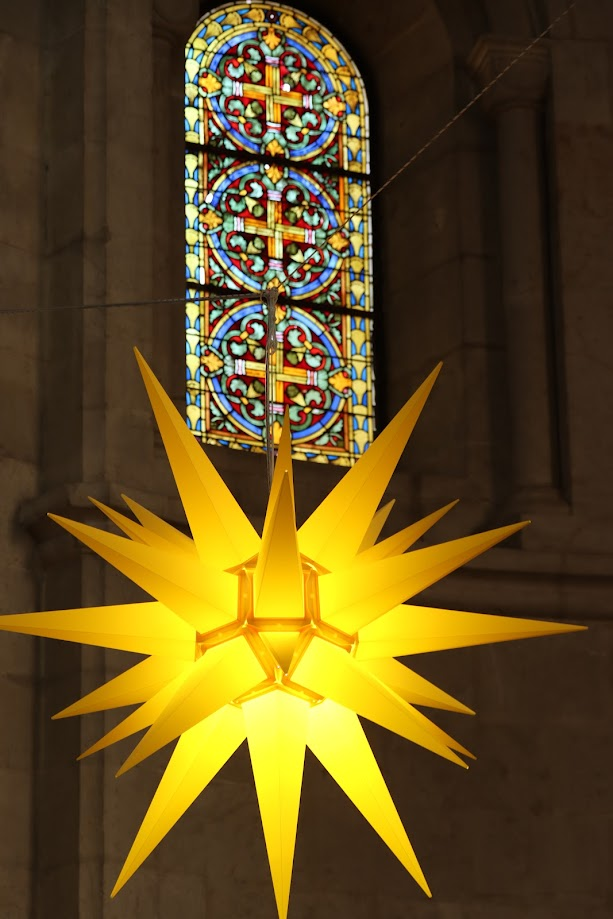
Photo 3: The entrance door to the Church of the Redeemer. Photo: Nir Topper.

Photo 4: The bell tower of the Church of the Redeemer (Mount Scopus in the distant background). Photo: Nir Topper.

Photo 5: On the right: The Crusader gate integrated into the church. Photo: Nir Topper. On the left: The Crusader gate before its integration, as photographed by Felix Bonfils in 1870. Source: Wikipedia.

Photo 6: A view of the Old City from the roof of the Hurva Synagogue. Center: The bell tower of the Church of the Redeemer. Left: The golden Dome of the Rock on the Temple Mount. Right: The two grey domes of the Church of the Holy Sepulchre. Photo: Nir Topper.

Photo 7: The Church of the Redeemer in 1900. Source: Wikipedia.


Comments