
Bite-Sized: One Concept a Day – The Ottoman Empire
- Nir Topper

- Mar 23
- 2 min read
The Ottoman Empire, named after its founder Osman I—leader of a Turkish principality in Anatolia at the end of the 13th century—ruled the Land of Israel for 401 years, from 1516 to 1917. The Empire left a profound mark on the geopolitical, legal, and social landscape in which we live today. At its peak, centered in Istanbul, it spanned three continents: Asia, Europe, and Africa.
Two Sultans left particularly prominent architectural signatures on the local landscape: Suleiman the Magnificent, who built the walls of Jerusalem’s Old City between 1537 and 1541, and Sultan Abdul Hamid II. To mark his Silver Jubilee (25 years of reign) in 1900, Abdul Hamid II initiated the construction of over a hundred clock towers throughout the Empire. Seven such towers were built in the Land of Israel—in Jaffa, Acre, Safed, Haifa, Nazareth, Nablus, and Jerusalem. While the Jerusalem tower was demolished by the British in 1922, the other six still stand today.
Beyond stone and mortar, the Ottoman legacy remains present in our lives through the administrative and legal systems of the State of Israel. Everyday concepts such as "Tabu" (Land Registry), derived from the Ottoman Land Law, or the "Status Quo" that regulates relations between Christian denominations at shared holy sites—and was eventually expanded to other holy sites—are direct inheritances of Sultanic legislation and decrees.
Although the Empire collapsed at the end of World War I, giving way to the British Mandate, the social structure it left behind—particularly the "Millet" system, which granted religious autonomy to various communities—continued to influence the shaping of religion-state relations and the sectoral structure of modern Israeli society, remaining in effect to this very day.
Image 1: The Coat of Arms of the Ottoman Empire (above the entrance to the Ottoman Municipal Hospital in Jerusalem). Source: User:Ranbar, CC BY-SA 3.0 via Wikimedia Commons.

Image 2: Map of the Ottoman Empire at its territorial peak in 1683. Source: Chamboz at English Wikipedia, CC BY-SA 4.0 <https://creativecommons.org/licenses/by-sa/4.0>, via Wikimedia Commons

Image 3: Suleiman the Magnificent. Source: Sculpture by Joseph Kiselewski; photo by the Architect of the Capitol, Public domain, via Wikimedia Commons.

Image 4: Osman I. Source: Public domain, via Wikimedia Commons.
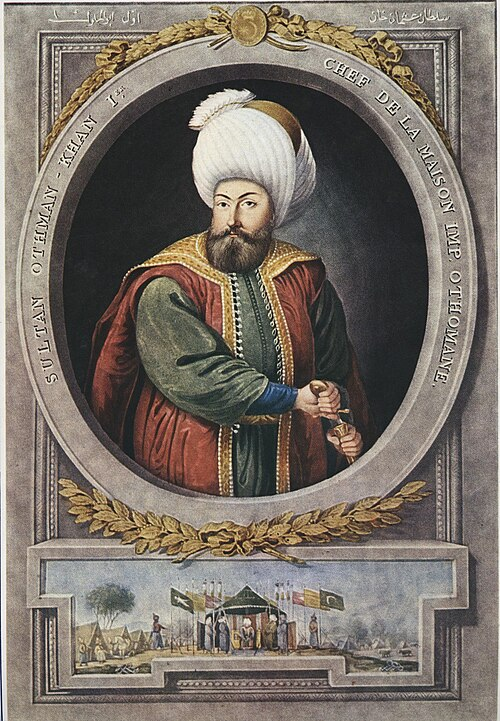
Image 5: Abdul Hamid II, 1867. Source: Public domain, via Wikimedia Commons. Source: Public domain, via Wikimedia Commons https://upload.wikimedia.org/wikipedia/commons/1/17/Abdul_Hamid_II_in_Balmoral_Castle_in_1867.jpg

👉Join one of my (quiet) Channels:
Telegram: nirtopper.com/telegram-channel
Whatsapp: nirtopper.com/whatsapp-channel
👉Rich content available for you; Israel's History, Society & Culture:
On my Blog: nirtopper.com


Comments